

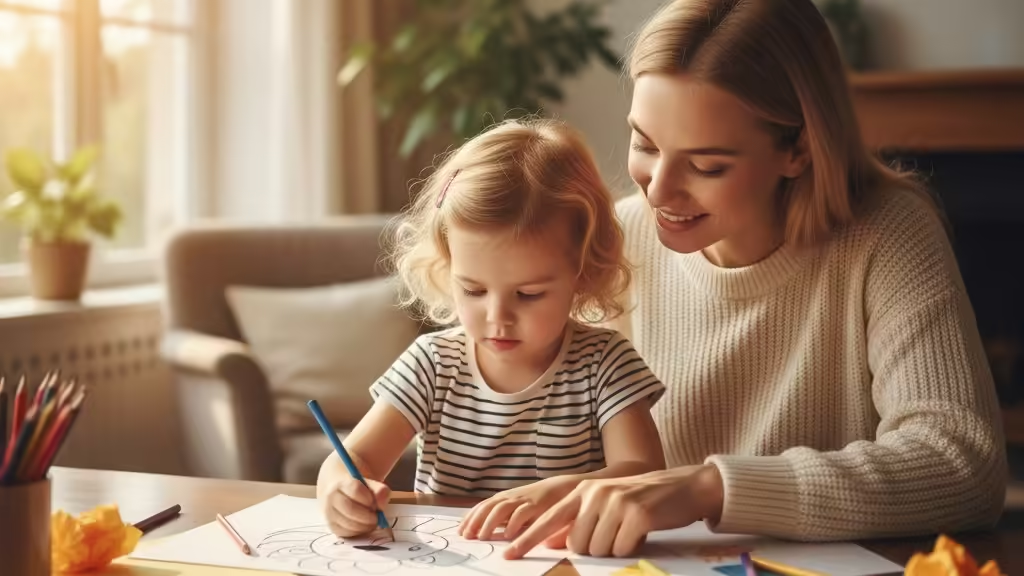
Coloring is good for your child’s brain in 7 ways: building fine motor skills and hand-eye coordination, boosting focus and patience, sparking creativity, developing color and shape awareness, relieving stress, practicing problem-solving, and building confidence. Far more than a game, it’s a daily brain workout.
Why coloring is more than a game
When your child colors, the brain juggles many jobs at once: eyes watching, hands steering, memory choosing colors, feelings coming out in color. It’s a full workout for the brain that few games can match.
1. Developing fine motor skills and hand-eye coordination
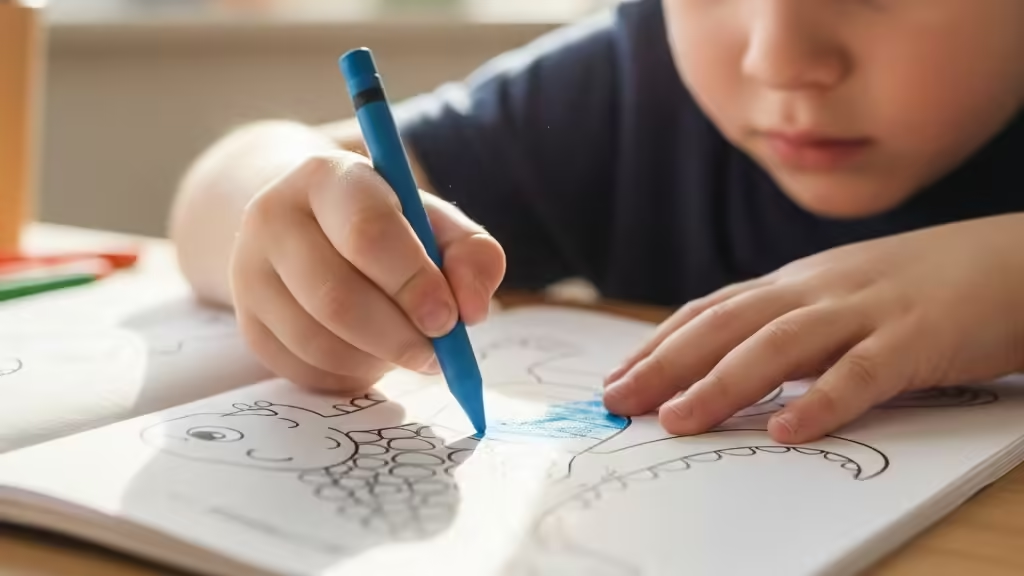
Staying inside the lines takes real precision — so for ages 2 to 3, choose bold-outline coloring pages with few details. With practice, your child will hold a pencil, button a shirt, and scoop food more skillfully.
2. Improving focus and patience
Finishing a picture takes 20 minutes of sitting still. That’s a natural focus workout from a simple coloring page, with no forcing needed.
3. Sparking creativity and imagination
Your child freely mixes colors and imagines stories. A little creativity every day soon becomes a habit of thinking.
4. Developing color and shape awareness
Your child learns green from blue, circles from ovals, big from small — all through play, and all the foundation of later math thinking.
5. Relieving stress and expressing feelings
When your child can’t yet say “I’m sad,” they show it through color. Coloring is a safe emotional outlet for kids.
6. Strengthening problem-solving skills
Colored outside the lines — how to fix it? This color ran out — what to use instead? Small daily decisions like these teach your child how to handle little problems on their own.
7. Building confidence and self-esteem
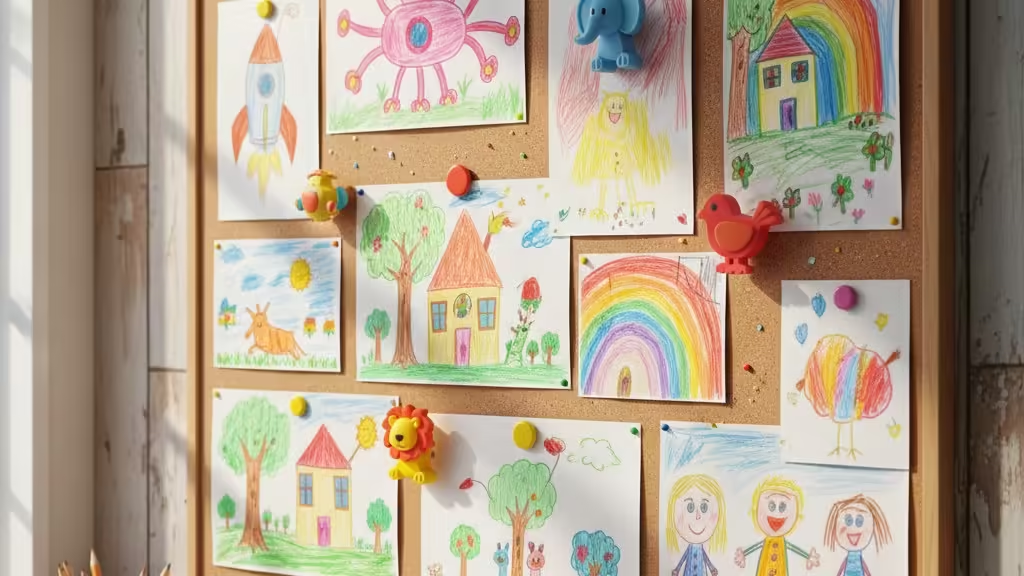
“I colored this all by myself!” — that feeling of success is the best confidence boost for a child.
Keep exploring
- 10 Tips to Get Your Child Excited About Coloring
- How to Choose Coloring Pages for Your Child’s Age
- Common Coloring Mistakes Kids Make and How to Fix Them
- Learn the Alphabet Through Coloring Pages: 101+ Printables for Playful Learning
- small habits that grow creativity through coloring
- how coloring helps kids feel calm and focused
- printing coloring pages for kids
- Addition and Subtraction Coloring Pages for Kids
- Numberblocks Coloring Pages for Kids
Reference: Learn more about APA research.
Frequently asked questions
Does coloring make my child smarter?
Coloring builds many foundational brain skills — focus, observation, dexterity — which in turn help your child learn better.
Can too much coloring hurt my child’s eyes?
Not with good light and proper breaks. Let your child rest their eyes every 20 to 30 minutes.
At what age should I start coloring with my child?
From age 2, with simple pages and safe crayons, and a parent sitting alongside.
Which printable PDF coloring pages are best for ages 2 to 3 for brain development?
Pages with 1 to 2 large color areas, bold outlines, and few details. At this age the goal is holding a crayon and recognizing colors, not coloring beautifully.
Is coloring on paper or on a tablet better for my child’s brain?
Paper is better — print pages at letter size for your child to color, since real fine motor practice and hand-eye coordination are involved. A screen is only a backup for trips.


