



Combining music and coloring helps kids focus better, feel less stressed, and grow creative emotions. This guide shows how to choose music for each age: cheerful children’s songs for preschoolers, gentle instrumental music for elementary kids, plus 4 tips to keep it from backfiring.
Benefits of combining music and coloring
Multisensory stimulation
Ears hear the music, eyes follow the picture, hands do the coloring — three senses working together, which is wonderful for your child’s growing brain.
Better focus, less stress
Gentle music creates a soft “background” that shields your child from distracting noises around them. Kids also relax more and color with greater absorption.
Emotional and creative development
Happy music leads kids to bright colors; gentle music leads them to pastels. Music guides emotions, and those emotions show up as colors on the page.
Choose music for each age
Preschool stage (ages 2 to 5)
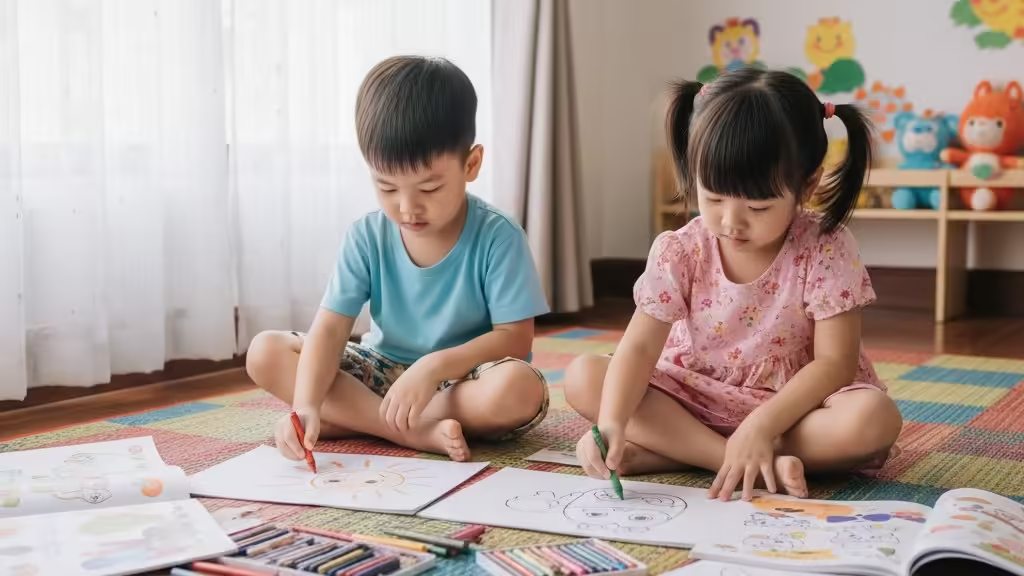
Cheerful children’s songs with a moderate tempo fit ages 2 to 4 coloring bold, simple pages. Your child may color while bouncing to the beat, and that’s perfectly fine.
Elementary stage (ages 6 to 10)
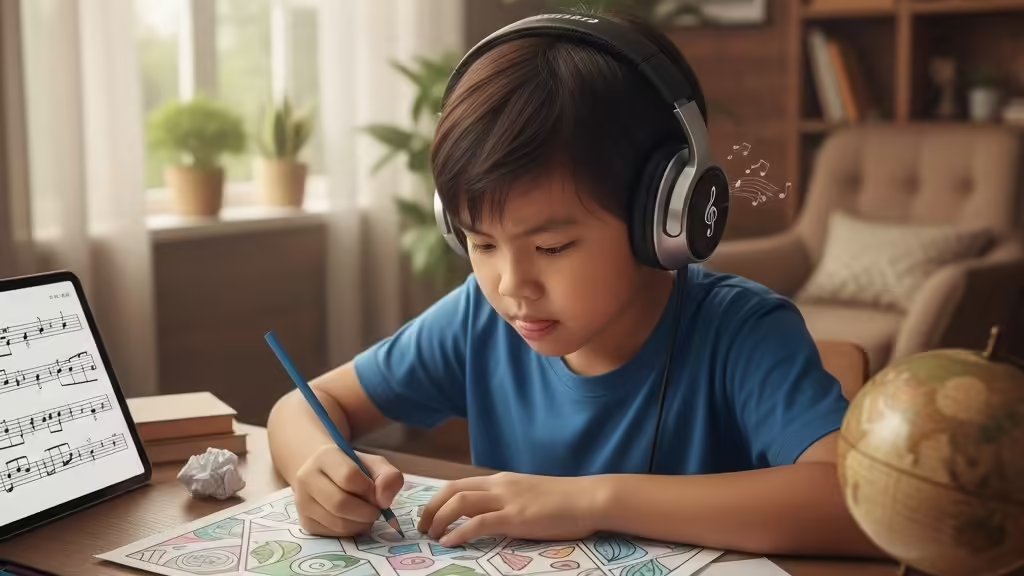
Instrumental music, light classical music, or nature sounds. Avoid music with lyrics, since older kids easily get pulled into the words and forget to color.
4 tips to keep it from backfiring
- Keep the volume moderate: loud enough to hear, not so loud it drowns out your child’s chatter.
- Don’t force your child to listen: if a child doesn’t like it, turn it off and don’t push it.
- Avoid music that’s too energetic: high-energy music overexcites kids and makes it hard to sit still.
- Watch your child’s reaction: if your child colors faster and sloppier with music on, try a different kind of music.
Keep exploring
- 10 tips to help your child fall in love with coloring
- How to choose coloring pages for your child’s age
- Cartoon coloring pages help kids create stories
- Beautiful Nature Coloring Pages for Kids
- kids staying patient with complex coloring pages
- emotional development through coloring pages
- parents coloring with kids every day
- Cocomelon Coloring Pages for Kids
- Baby Shark Coloring Pages for Kids
References: the NAfME website, ScienceDirect — Early Childhood Research Quarterly.
Frequently asked questions
Does playing music while my child colors hurt their focus?
It depends on the music. Gentle instrumental music usually helps focus, while energetic music with lyrics easily distracts.
How long should I play music?
Through the whole coloring session is fine, as long as the volume is moderate and your child is comfortable.
What if my child doesn’t like listening to music while coloring?
Respect that. Not every child suits this approach.
What music suits 3- to 4-year-olds coloring and listening at the same time?
Cheerful children’s songs with a moderate tempo. Avoid complex lyrics that make your child listen instead of color.
Which coloring pages should I download for kids who color while listening to music?
Simple pages with few details — download the PDF, print it on letter-size paper, play very soft instrumental music, and your child will color away happily.


