


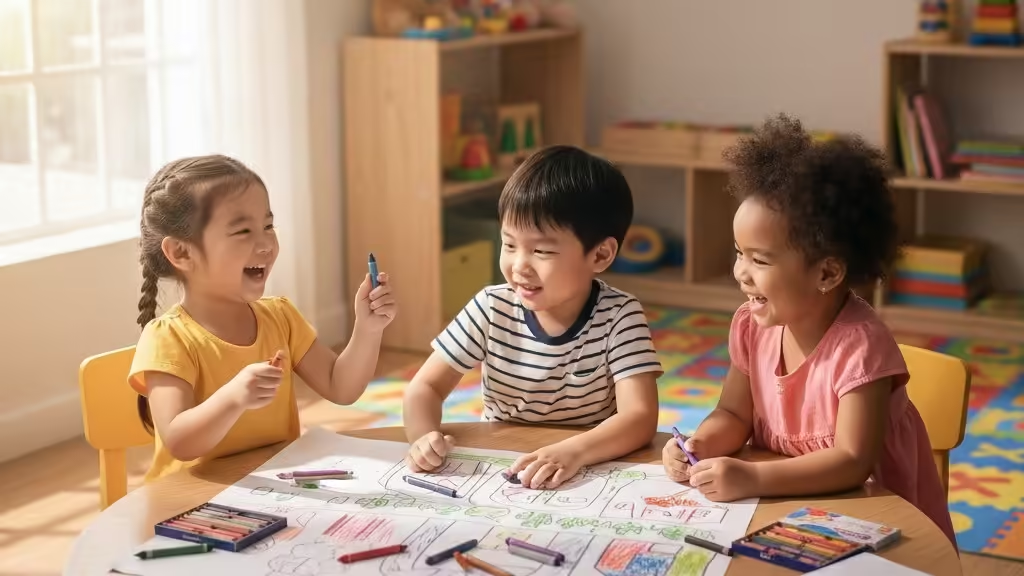
Group coloring brings 5 golden benefits for kids’ social skills: language communication, cooperation and sharing, creativity and thinking, confidence, emotion management, and conflict resolution. This guide shows how to organize an effective group coloring session at home, in class, or at a birthday party.
Group coloring: more than entertainment
When several 4- to 6-year-olds color one big picture together, or each colors a corner, kids learn real interaction: asking, giving, waiting, and negotiating. It’s a miniature social school.
5 golden benefits for social skills
1. Communication and language skills
Kids have to say what they need: “Can I borrow the red?” Vocabulary and boldness grow with every session.
2. Cooperation and sharing
Finishing one picture together teaches teamwork: dividing tasks, waiting for turns, and respecting a friend’s section.

3. Creativity and thinking
Seeing a friend’s unusual color combination, kids learn from it and try it themselves. Creativity spreads through a group faster than when a child colors alone.
4. Confidence and self-esteem
When the whole group praises their section, even a shy child gradually grows bolder.
5. Emotion management and conflict resolution
Fighting over colors is normal. When parents guide kids to negotiate and wait, that’s a precious emotional lesson.
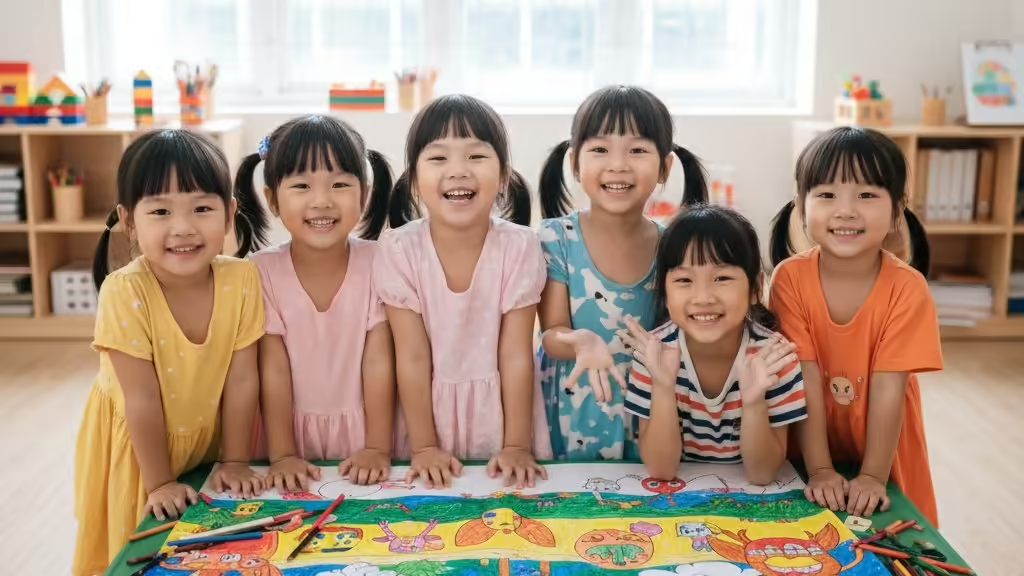
Organizing an effective group coloring session
Prepare space and materials
A table big enough for the whole group; download and print a large PDF page, give each child their own set of colors to limit squabbles, and add a few shared colors to practice sharing.
Set simple rules
Three rules are enough: ask before taking, wait for your turn, and praise a friend when they color beautifully.
Encourage interaction
Print letter-size pages on the same theme for the whole group to color, then tell a story about the shared picture. Every child contributes.
Frequently asked questions
What ages suit group coloring?
From age 3 and up. Younger kids need more parental help with sharing.
What do I need to prepare?
A large page or many pages, one set of colors per child, and plenty of space.
How do I handle kids fighting over supplies?
Remind them of the rules you set, and guide them to negotiate. Don’t rush in to solve it for them.
Can group coloring help a shy child?
Yes. A cheerful group setting helps shy kids gradually open up and grow bolder.
How many pages should I print for a group coloring session?
Two to 3 letter-size pages per child on the same theme. Since pages are free to download, print extras without worry.
Can 3- to 4-year-olds join group coloring?
Yes, but parents need to sit nearby and help with sharing. Choose simple pages with few details for little kids.


