


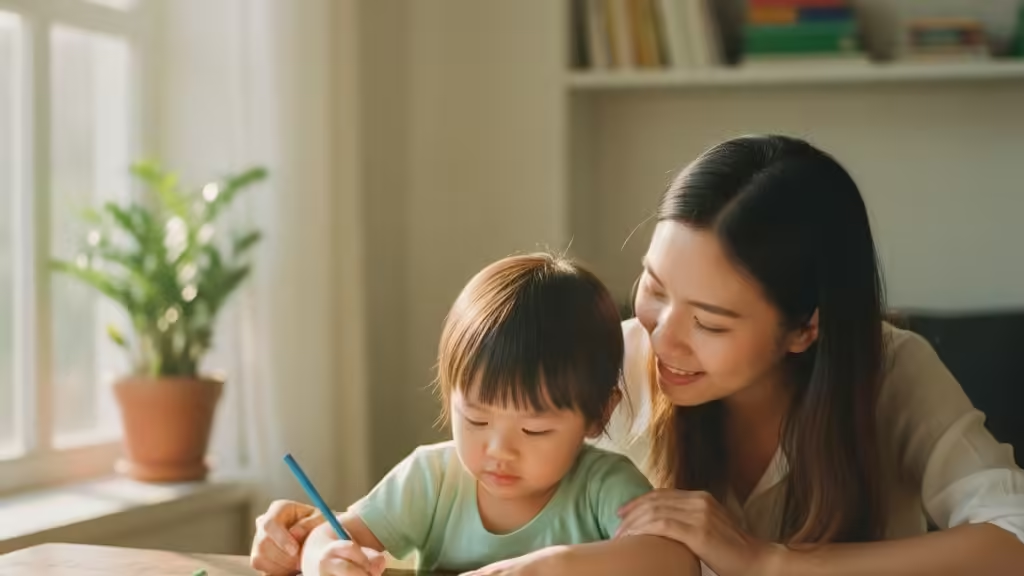
Mindfulness coloring is a way of coloring with full attention on the present moment: your child focuses on each stroke, breathes evenly, and lets the mind relax. This article explains 4 benefits — better focus, less stress and anxiety, emotional intelligence, and fine motor skills — plus how to practice at home.
What is mindfulness coloring?
Mindfulness means paying attention to the present. In mindfulness coloring, your child does not rush to finish but enjoys each stroke: feeling the color spread on paper, hearing the soft scratch of the crayon. It is that simple — and it works surprisingly well.
4 surprising benefits for kids
1. Stronger focus and attention
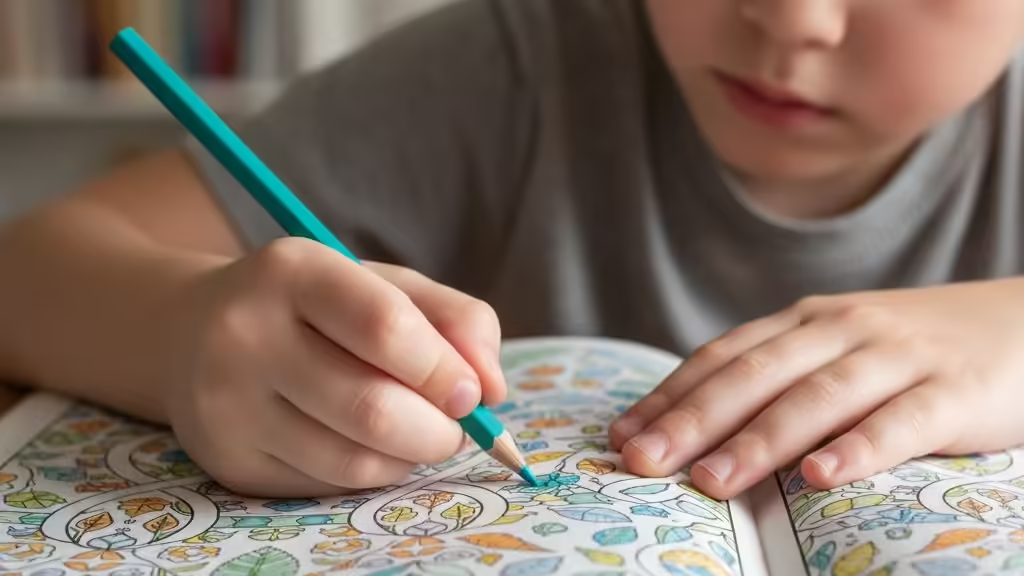
Focusing on one stroke at a time is focus practice in its simplest form. Kids practice the ability to “stay” with one task.
2. Effective stress and anxiety relief
A steady coloring rhythm helps a busy mind settle down. Kids ages 4–6 who worry a lot or struggle to sleep will settle after 15 minutes of mindfulness coloring in the evening.
3. Emotional intelligence (EQ) and self-awareness
As they slow down and pay attention, kids start to notice how they feel — happy or sad, rushed or calm. That is the first step in emotional self-awareness.
4. Better fine motor skills and hand-eye coordination
Coloring slowly and carefully makes strokes neater than rushing through. You will see their little hands grow steadier, picture by picture.
Practicing mindfulness coloring at home
- Download simple coloring pages with repeating patterns like leaves and waves, print them on letter-size paper — they are ideal for mindfulness practice.
- Quiet space: turn off the TV; you can play soft instrumental music.
- Guide your child’s breathing: breathe in as they lift the crayon, breathe out as they color a stroke.
- No scoring: pretty or not does not matter — what matters is that your child relaxes.
- Gentle ending: admire the picture together and ask your child how they feel.
Frequently asked questions
What age can kids practice mindfulness?
From ages 4–5, kids can follow simple guidance like paying attention to their breath.
How long should each practice last?
Ten to 15 minutes is enough for little ones. Do not stretch it until they get tired.
Can an energetic child practice?
Yes, but start with 5 minutes and build up gradually. Do not expect your child to sit still right away.
Should parents practice too?
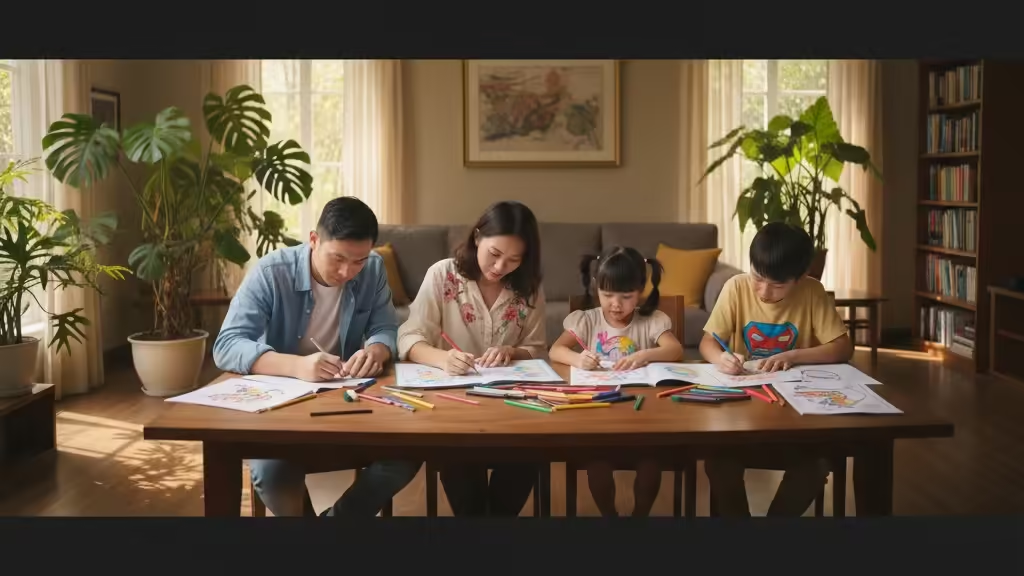
Definitely. When parents model it, kids learn much faster.
Which coloring pages suit mindfulness practice?
Pages with repeating patterns — leaves, waves, simple mandalas. Download them and print on letter-size paper for slow coloring.
Can kids ages 3–4 practice?
No exact technique needed yet. Just let your child color slowly, without rushing; 5–10 minutes at a time is enough.


