


Coloring simple coloring pages every day develops children’s imagination in 4 wonderful ways: free color choice unconstrained by reality, association and building a world of their own, activating creative brain areas, and recreating the world in their own way. Here is how each one works — and how you can spark even more of it while your child colors.

What is imagination in children, and why does it matter?
Imagination is the ability to picture things that do not yet exist. Children with strong imaginations tend to solve problems more flexibly, express themselves better, and fear new things less. It is a skill to nurture early — not something to wait until school for.
How does coloring spark children’s imagination?
1. Free color choice, unconstrained by reality
In a coloring page, the sun can be blue and the cat can be purple. Kids learn they have the right to decide, to try, and to make mistakes. This freedom is fertile ground for creativity.
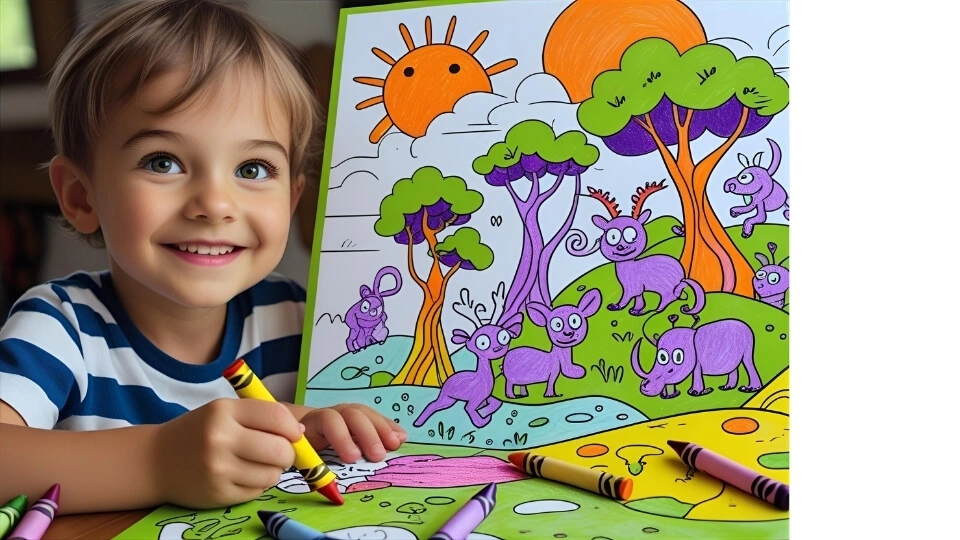
2. Association and building a world of their own
Kids do more than color — they imagine a story: where is this dinosaur going, whose house is this? When a parent asks, ‘tell me about this picture,’ a whole world opens up.
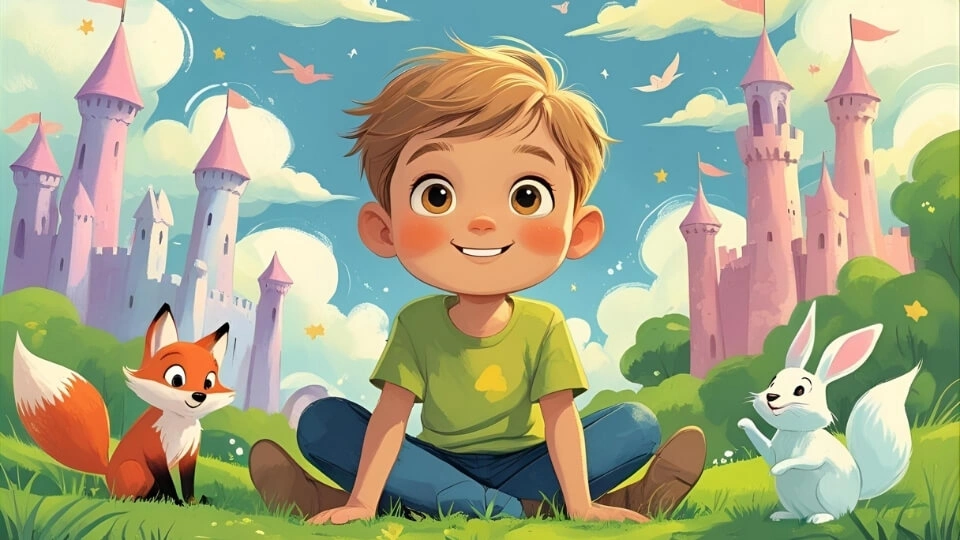
3. Activating brain areas linked to creativity
Choosing which colors go together gets both the thinking side and the feeling side of your child’s brain working. The more they create, the stronger those connections grow.
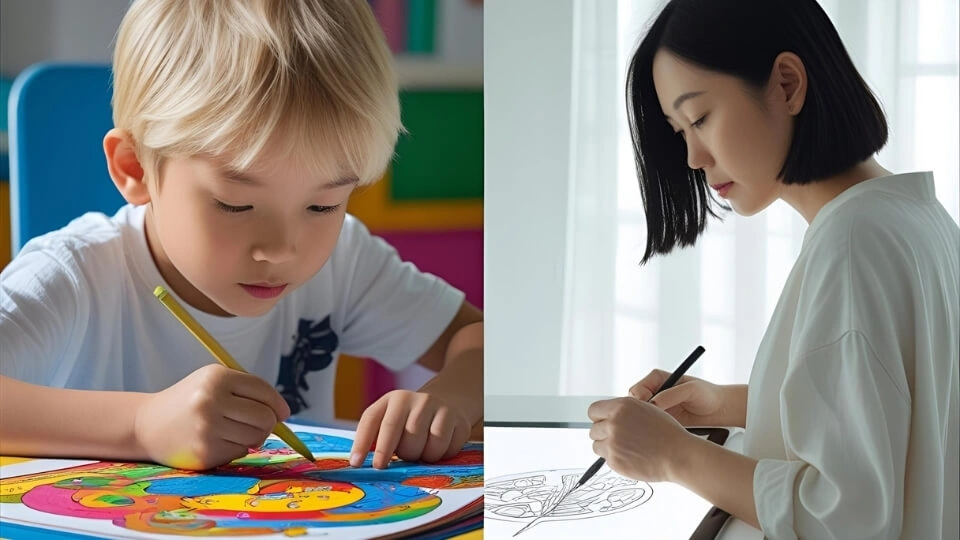
4. Recreating the world around them in their own way
A child observes their own cat, then colors a cat coloring page from memory, adding imaginative touches. Watching, remembering, and remaking it their own way — that is creativity taking root.
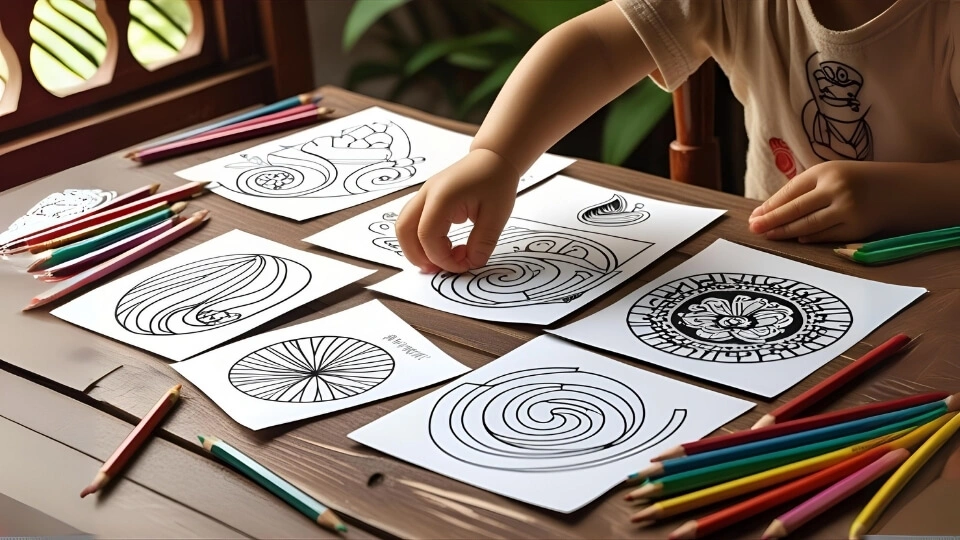
How can parents spark imagination while kids color?
- Do not correct your child’s colors: ‘The sun must be yellow’ kills creativity faster than anything.
- Ask open-ended questions: ‘If you were this dinosaur, where would you go?’ instead of ‘is your coloring pretty?’
- Tell stories from pictures: after finishing a favorite cartoon coloring page, invent a short story together about the characters in it.
- Swap roles: sometimes let your child ‘teach’ you to color — they will confidently present their own ideas.

Discover more
- How to Print Coloring Pages for Kids
- Benefits of coloring pages for child development
- Why coloring pages help kids stay calm and focused
- Discover your child’s personality through favorite colors
- 80+ Bunny Coloring Pages for Kids – Play and Learn
- Fairytale castle coloring pages for kids
- Baby dragon coloring pages for kids
References: Early Childhood Research Quarterly (2010) on the role of art activities for young children.
Frequently asked questions
Does coloring really make kids more creative?
Yes. When free to choose colors and imagine stories, a child’s brain practices creativity every day.
Should I correct my child for coloring messily?
No. Let them be free — offer only a gentle suggestion when they ask for your opinion.
How long should kids color each day to develop imagination?
20 to 30 quality minutes in a comfortable space beats forcing a child to sit for a long time.
Are simple or detailed pictures better for imagination?
Simple pictures are better because they leave more empty space for kids to imagine and add to.
My child only wants realistic colors — should I encourage creative coloring?
Suggest gently (‘try coloring the sun blue and see’) but do not force it. Creativity takes time, and kids will dare to try once they see parents praise them.
Which coloring page themes spark imagination best?
Fairytales, space, dinosaurs — themes kids can invent stories for. Download the PDF, print on letter paper, and let 4-5-year-olds color one each day for the best fit.


